The best ways to get your motorcycle to the race track: a realistic guide
You want to do a track day. You've got the gear, you've got the bike, and Thunderhill, Sonoma, or Laguna Seca is on the calendar. The thing nobody warns you about is the logistics that come before you ever turn a lap: how do you get a motorcycle to a racetrack when you live in a city and don't have a garage for a dedicated truck sitting around?
The right answer depends on how often you plan to go to the track, what you currently drive, and how much hassle you're willing to absorb. Here are the realistic options, with approximate costs and honest trade-offs.
Option 1: Ask a friend with a truck
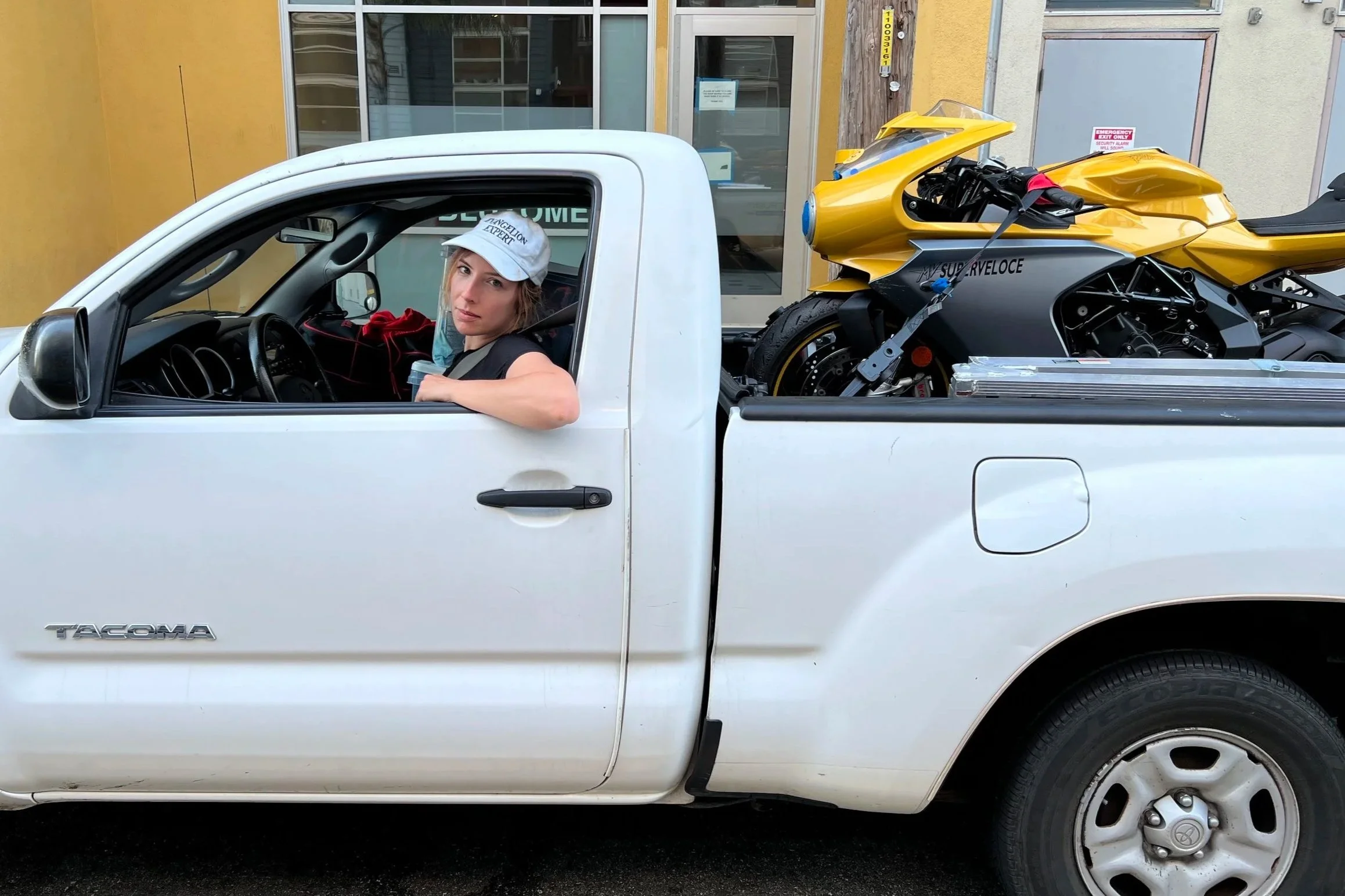
If someone in your riding group has a truck or van, offer to cover gas both ways and pay them something for their time. The motorcycle community is tight, and most people actually want to go to the track with a buddy. Don't be afraid to ask. You can be that buddy. This country needs to rely on and strengthen our sense of community now more than ever.
The catch is dependency. You're locked into their schedule and their comfort level with towing. If something goes sideways at the track — crash damage, a flat, running late — you're dealing with it on someone else's time. It can strain a friendship. That said, for a first track day or if you're not sure yet whether you even like this, it's a low-commitment way to find out.
Option 2: Add a hitch to your existing car and rent a trailer
If you already have an SUV, crossover, or smaller truck, this one is worth running the numbers on.
A hitch installation runs $300–$650 for most vehicles, once. After that, U-Haul rents a 5x9 enclosed motorcycle trailer for around $30–$40/day all-in after insurance and taxes. Two things to know before you book: the trailer has to go back to the same location you rented from, so no one-way trips. And U-Haul recommends a 55 mph max towing speed, which matters on longer highway runs.
Check your vehicle's tow rating first. You need at least 2,000 lbs, which most SUVs and crossovers handle fine. Some sedans don't. Europeans reading this can ignore that last part; they've been hauling boats with a Fiat 500 for decades. Americans, we need a war tank to bring their groceries.
The hitch pays for itself within a few rentals compared to renting a full truck, and you're still in your own car. For riders who track 2–4 times a year, this tends to be the best ongoing value.
If you find yourself renting a trailer more than 15 times a year, buying your own starts to make sense. The Kendon Stand-Up Folding Sport Bike Trailer is the one worth considering. It holds up to three bikes, folds flat for storage (27" × 84" footprint), runs on independent torsion bar suspension, and ships with a loading ramp stored underneath. Starts at $4,319. It holds its resale value well, and it's made in California.
Option 3: Buy a dedicated truck or van
Buy a Toyota Tacoma or a full-size van. The day before the track, you load up your bike and go. Simple.
If you already own a truck and have a garage, this is the best option. If you don't, buying one just for track days is a hard sell, and in the Bay Area, it's harder than it sounds. A decent used truck or van starts around $15k, then add $2,200–$4,350+ per year for maintenance, insurance, and registration. Parking alone can run $300–$600/month if you're renting a space in the city, and more if you're dealing with street parking, tickets, or break-ins.
Unless you're doing 30+ track days a year and already have the storage figured out, the numbers rarely add up.
Option 4: Hire a transport service
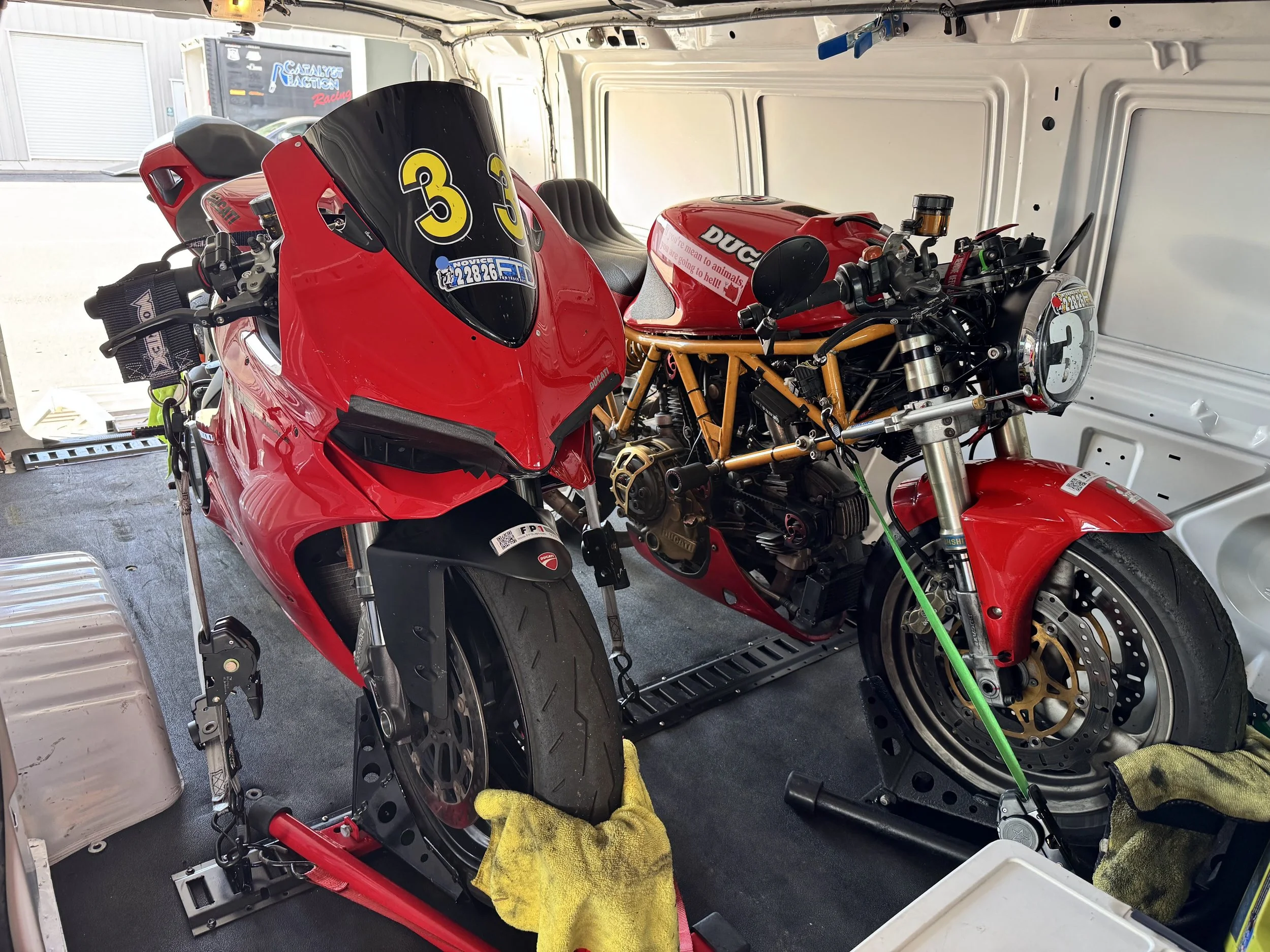
Inside the cargo van of 31 cats
If none of the above fits, having someone else handle the transportation is the most sensible option.
31cats.com runs dedicated motorcycle transport in the San Francisco Bay Area, covering tracks like Thunderhill, Sonoma Raceway, Laguna Seca, Buttonwillow, and The Ridge. It's a small operation — 1 to 3 bikes at a time — with personal, attentive service at an affordable price. Pricing starts at $240 and is designed to be a real alternative to renting or owning a truck.
They pick up your bike from your home on a day that works for you, transport it securely in a cargo van, and return it safely after the event. You handle none of the logistics. You just show up and ride.
The Moving Moto is based in Los Angeles and covers SoCal tracks. They handle transport plus some track-side support. Contact them directly at 310-614-1739 for availability and pricing.
619 Knee Draggrz are based in San Diego and haul multiple bikes in a big rig, covering ground well outside California: COTA in Austin, the Ridge Motorsports Park in Washington, circuits in Alabama and Utah. It's less of a transport service and more of a full program: pit-side catering, on-track coaching, mechanical support, and a race bike rental program. Pricing isn't public and is on the higher side.
Option 5: Rent a truck or cargo van
No hitch needed. A U-Haul 10-foot box truck has a base rate of $29.95/day, but the mileage charge is where it gets expensive: $0.79–$0.99/mile on weekdays, up to $1.39/mile on weekends in California. Add fuel, these trucks get 10–12 MPG loaded, so figure 25–30 gallons for the Thunderhill round trip, plus insurance, and you're looking at $380–$550 all-in depending on how far away the track is.
Cargo vans run similar numbers despite the lower base rate. The bike stays enclosed and protected, and you don't need a hitch. The trade-off is that a box truck is uncomfortable to drive all day, you have to return it after an already tiring track day, and you're out $400–$550 to U-Haul, plus $120 or more in gas.
Option 6: Ride the motorcycle to the track
For some tracks and some riders, this is a perfectly reasonable call. Sonoma Raceway is 45 minutes from San Francisco. On street tires, living nearby, riding there makes sense. I have a friend who rides at 4 am from San Francisco to Thunderhill on his R3, but he's braver than most of us and has a lot of friends with tools, food, chairs, and canopies that he can use.
A few things worth thinking through before you commit:
Don't run race-compound tires on the street. They don't heat up enough at road speeds to grip properly. Fatigue is the bigger issue; a highway ride before a full day on track takes more out of you than it sounds, so plan for it. Think through the crash scenario too: if you go down at the track, your ride home is gone. Have a backup plan: a friend who can come get you, AAA roadside service for towing, or at least a way to store the bike overnight. And remember: you won't be able to bring a chair, a cooler, or anything that makes a long day at the track comfortable. Riding home at night in cold air with a tinted visor and a tracksuit is very uncomfortable; this sport is dangerous enough without adding an exhausting ride home to the mix.
Conclusion
If you own a truck, use it. If you have a capable vehicle and no hitch, add one. If you don't have any of that, hiring transport from 31cats.com is the most practical solution for most Bay Area riders. Riding to the track works but only when the distance is short, you're on street tires, and you've got a plan if things go sideways.